Part I - Caught Off Guard
So, boys,
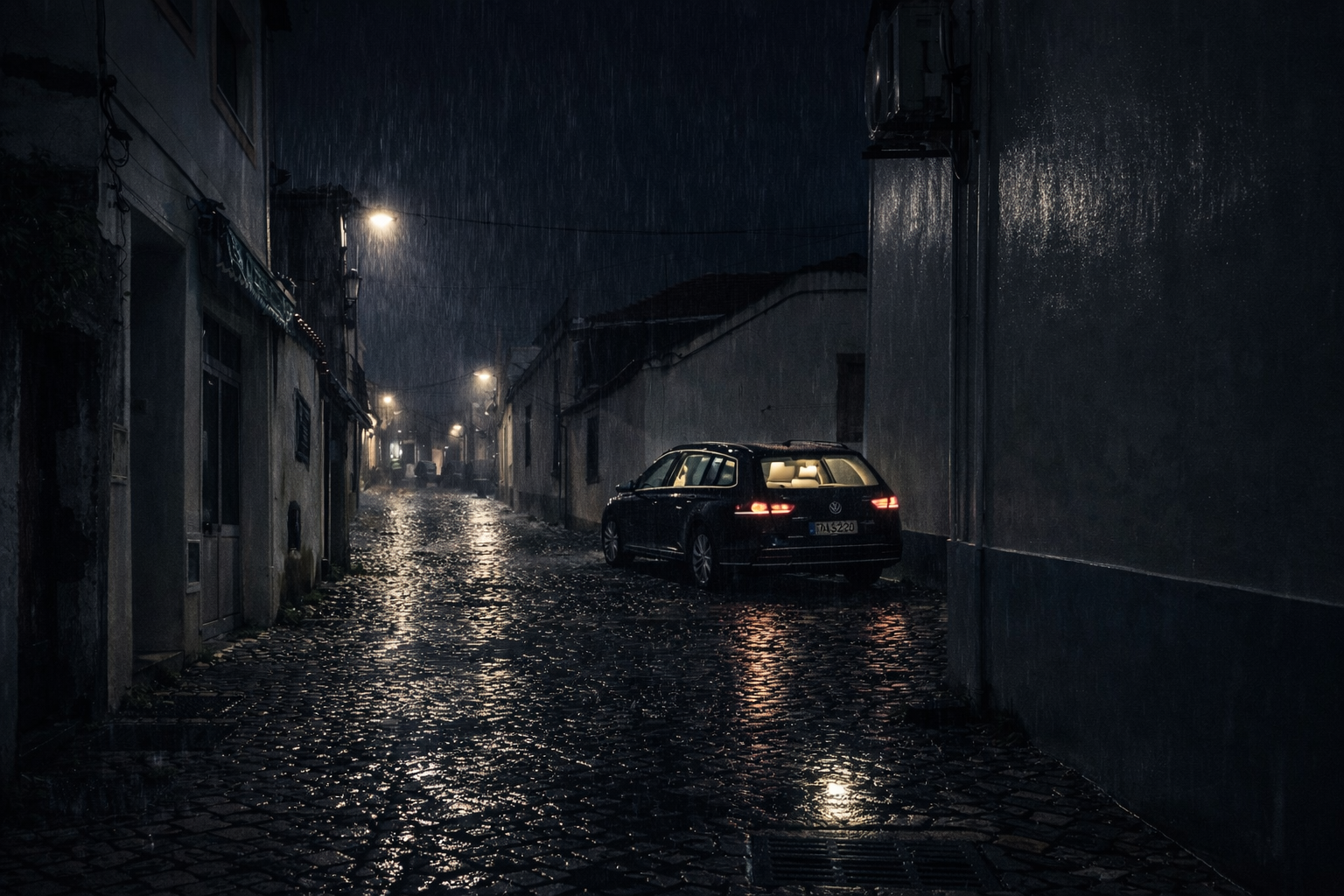
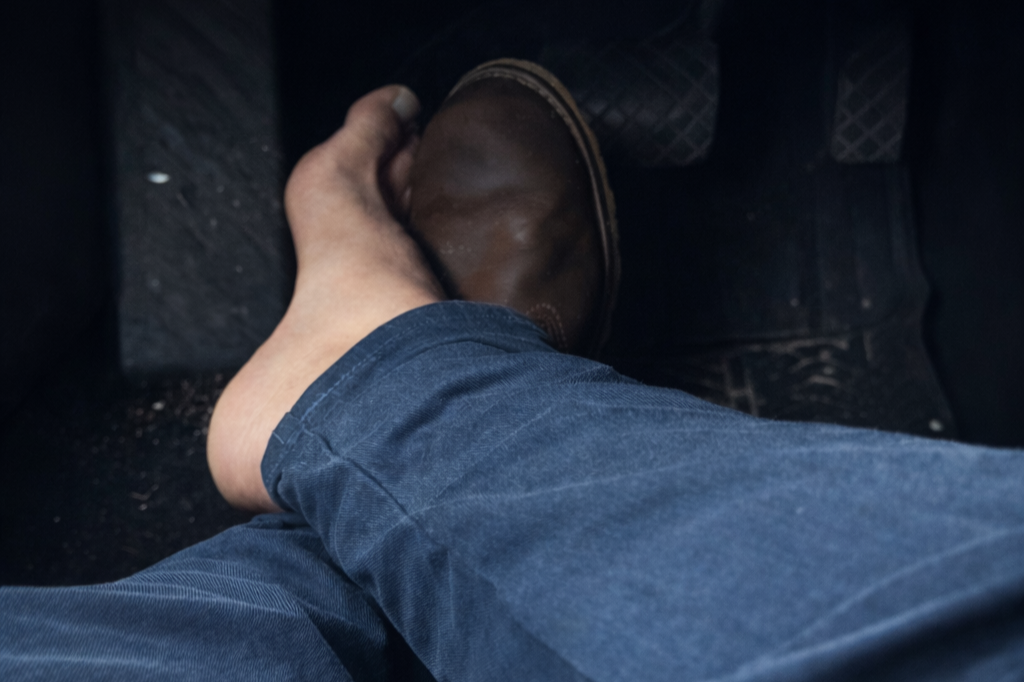
there I was — sitting in the car with the engine running, the heater on full blast, pointed straight at my feet. I was barefoot, trying to warm up and dry off. On the passenger side floor, I had laid my wet boots and socks out under the vents like they were laundry, hoping the heat would do something.
Outside, it was getting dark. It was still raining. And the town didn’t sound like itself — footsteps moving fast, voices calling out, people going back and forth with a kind of urgency you don’t usually see around here.
I had just tried to get back to the building. I thought the water was low enough that I could make it inside, grab a bag with clothes, my camera gear, my computers — the essentials — and get out again.
But the street only slopes slightly, and with the water so murky, I couldn’t really judge depth by looking. I was trying to read it the only way I could — by the sides of the buildings, by the few people passing through in high boots. And there I was with my Timberland leather boots, telling myself it was fine.
Until it wasn’t.
The first real warning wasn’t visual. It was the cold. That sudden hit of cold water against my feet. I looked down and realised my boots were completely submerged — mid-shin deep — and my pants were already soaking. That was the moment I stopped and turned back.
And that’s how I ended up there, drying off, buying time, waiting for the water to drop — with that stupid, constant thought in the background: I just need one small window to get inside. And, underneath that, another thought I didn’t even want to say out loud: About the two of you. How lucky that that week, you were with your mother! How fast a normal day can flip.

—
Hours earlier, at 4:20 a.m., none of this felt inevitable.
I got up to drink a glass of water. And because there had been warnings a few days before about possible flooding — warnings that hadn’t turned into anything — I glanced out the living-room window, almost out of curiosity.
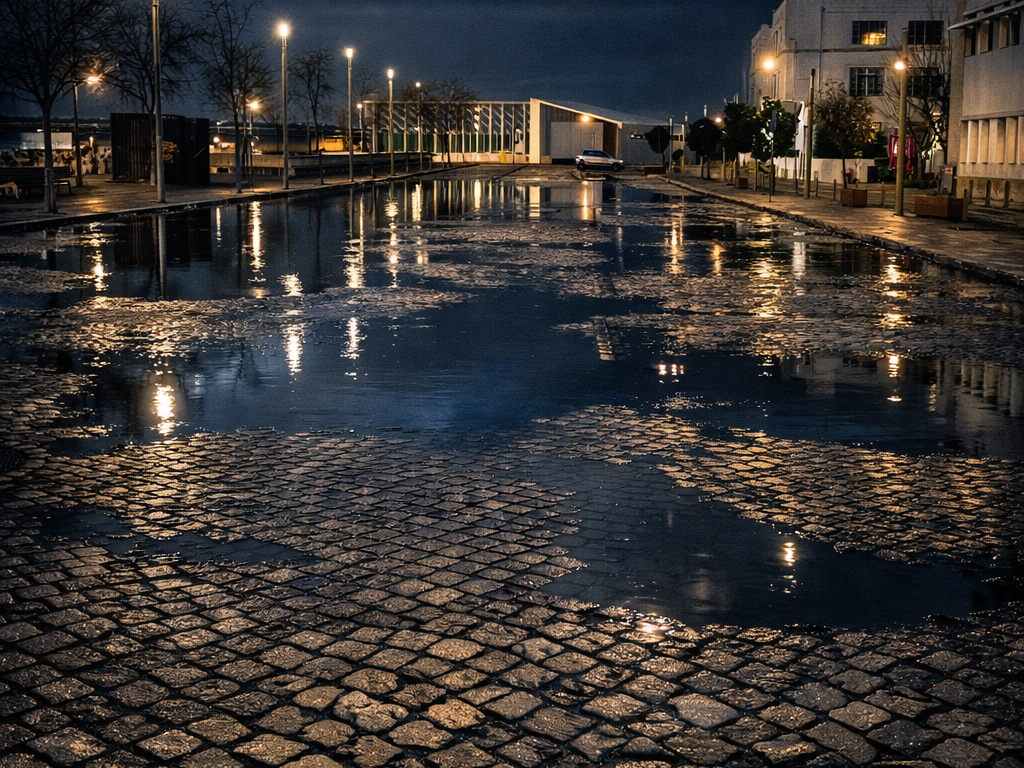
That’s when I noticed a puddle forming in the middle of the parking lot.
It wasn’t dramatic. More like: hmm… that’s new. What caught my attention was where it seemed to be coming from — the drainage grids. We’d had days of rain already, and I had never seen puddles forming from those drainage ducts like that, right there in the middle.
So, just in case, I moved the car to higher ground. Calm. No rush. I honestly didn’t think the lot was about to flood — I just thought it was smarter to move it now than regret it later. Also, most of the neighbours had already parked their cars elsewhere, still carrying fear from the previous warnings that never came to fruition. That helped push my decision, too.
I got dressed and drove around looking for a new spot. Most of the spots were already taken. It couldn’t have taken more than twenty minutes.
When I came back, the parking lot was already completely submerged.
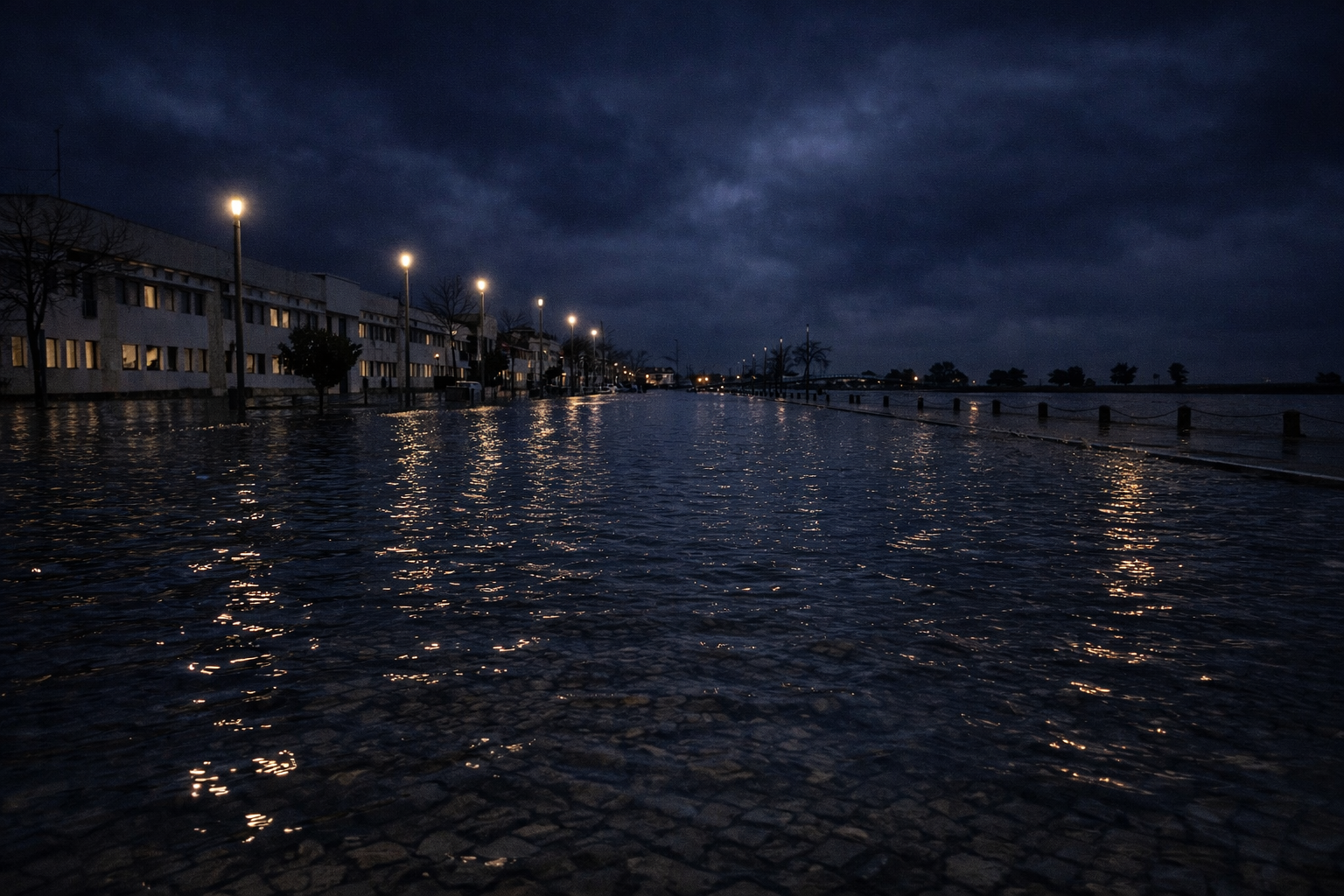
In the four years I’ve lived there, I have never seen that happen. Not once.
I went back upstairs and didn’t go back to bed. I got on the computer and started doing basic work — replying to emails, getting ahead on small day chores, the kind of things you can do quietly while everything is still asleep. Every so often, I’d check the water.
Around 6:30 a.m., it started to recede, right as low tide began. And that detail matters, because it made the whole thing feel like it had passed — like it had been a strange early-morning episode and now it was over.
After 7 a.m., most people would have had no idea it happened at all.
And the day… the day looked normal.
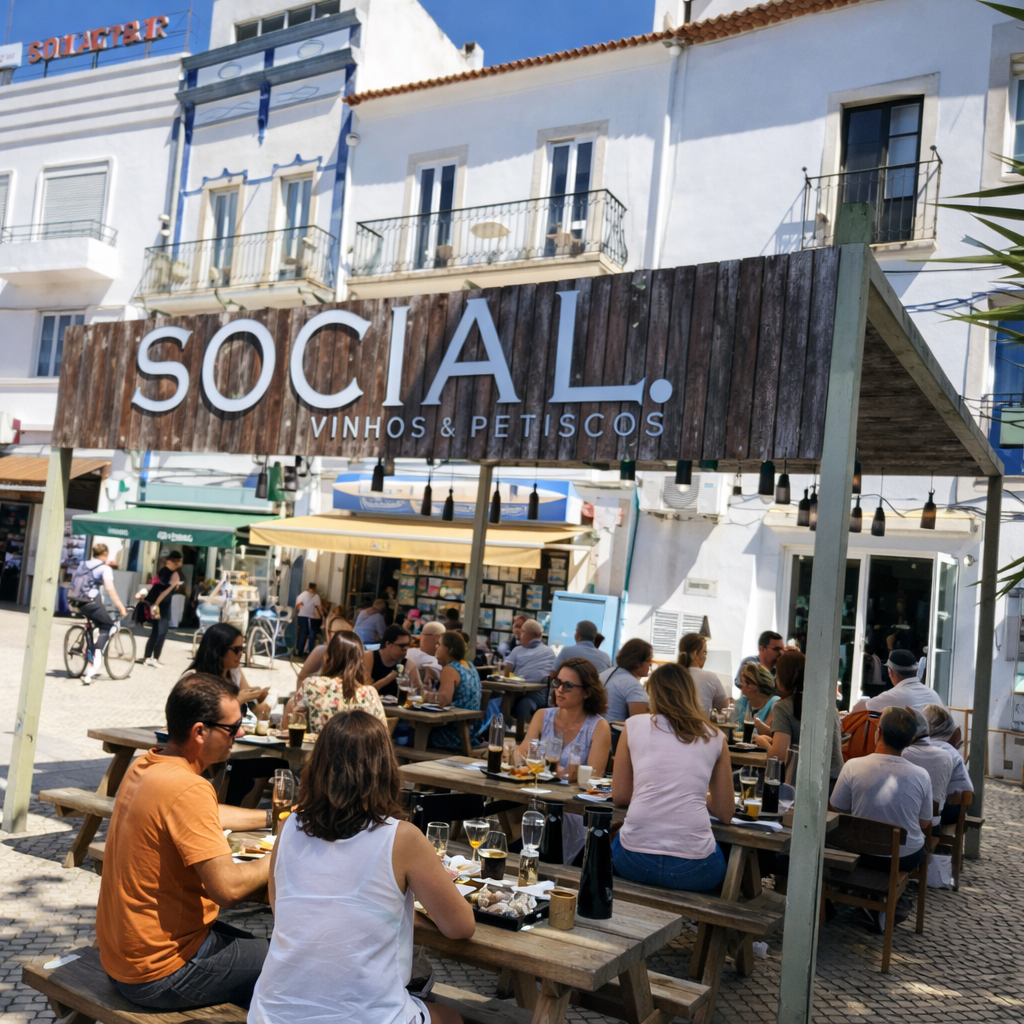
People shrugged it off. People joked. The “this only happens every thirty years” story came up again. Restaurants prepared lunch. Storefronts opened. Life went on like Alcácer always does. On the way back from the gym, I even stopped at Social, and everything felt calm — they were preparing for lunch like any other day.
I worked from home that day because the road out to Herdade da Barrosinha is low, and it’s one of the first areas that can get submerged and cut off. If Barrosinha became isolated, I could end up stuck out there — suddenly far from home. Far from town. And the thought that bothered me most wasn’t my studio or my gear. It was being far away from you boys, in case things got worse.
So I stayed close.
And then, later in the afternoon, in almost the same kind of happenstance as that morning, I got up from my computer just to rest my eyes. I glanced out the window again.
The parking lot looked abnormally empty. And there it was — the same kind of puddle forming again.
For a second, it made me think: maybe I should leave the apartment with my bags and essentials, as I had planned earlier.

But I looked at that puddle and remembered what happened in the morning — how the water rose, and then how it went down again with the tide — and I didn’t react with urgency. I thought: this might be my chance to document it properly.
So I grabbed my camera and went out.
Little did I know what was actually coming.
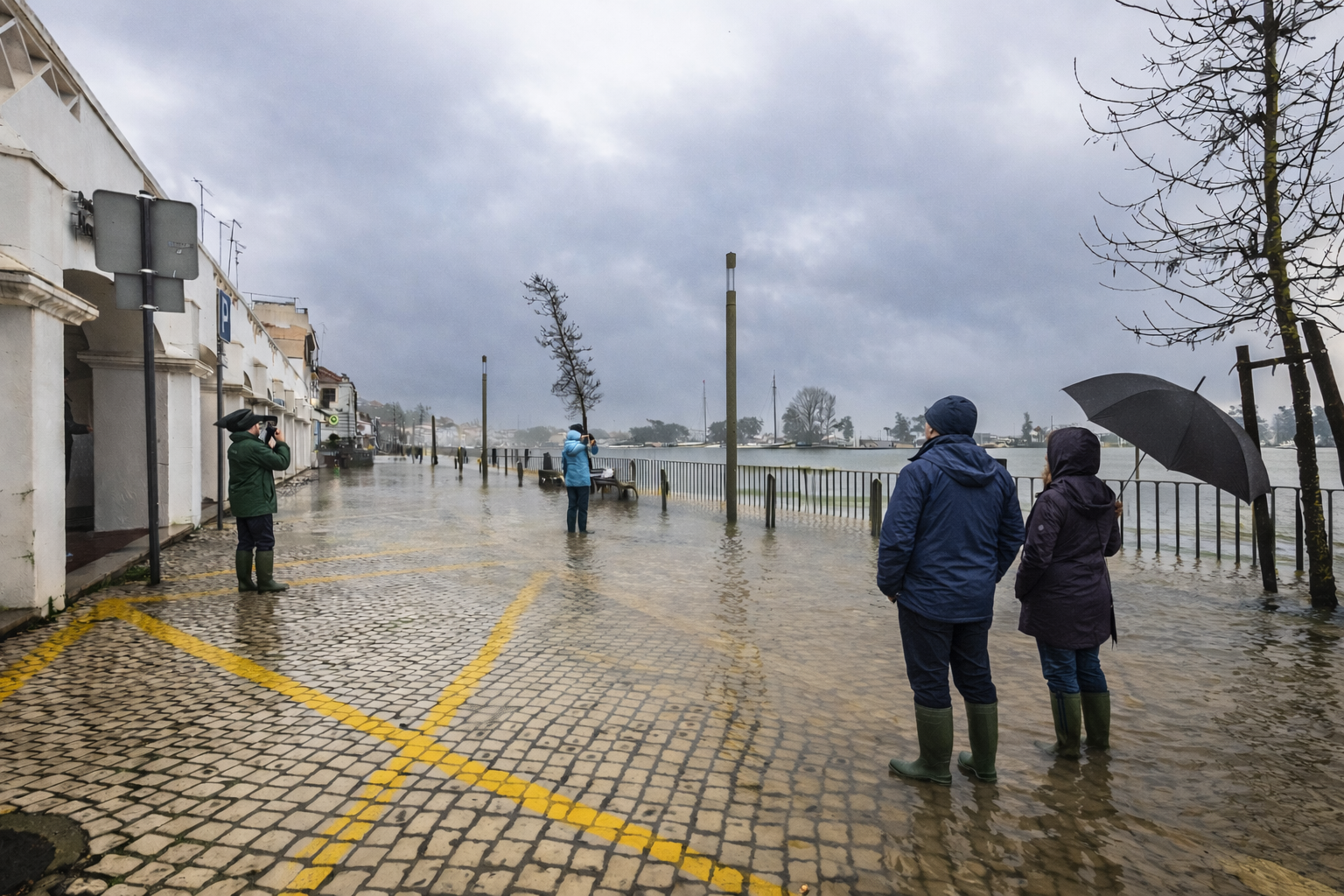
At first, it still looked like something people were curious about. People were watching, laughing, filming with their phones. The river rising was still something to look at, not yet something to run from.
So I moved through the back streets to keep following it. I headed toward the east end of the river, toward Social, because that’s where I could see the water meeting the businesses first.
And that’s where I felt the shift.
The closer I got, the more the mood changed. The calm curiosity tightened into something anxious. People started moving with an urgency that just isn’t normal here — not in Alcácer, not in Alentejo. Faster steps. Shorter sentences. Eyes scanning.
When I reached Social, the water was already arriving at the outside seating area. The staff was scrambling, lifting what they could and putting things higher — chairs, crates, whatever mattered first — trying to stay ahead of it.
On the way back toward my side of town, I met Tio João halfway — you know him. Always upbeat, always calm, that easy smile.
That day, he didn’t have it.
He was on the phone, walking fast, and the look on his face was different — serious, anxious, urgent. When he saw me, he put the phone down and told me the water had already started entering the porch at Sal no Rio. And that was worrying because the porch sits about a meter above the ground. Meaning: this wasn’t comparable to what I had seen that morning.
We parted ways, and then he turned back and said something simple that stayed with me:
That I probably wouldn’t be able to enter my building anymore.
I walked faster after that. Still stopping sometimes, camera out, because the town was changing in front of me.
Then I came into that open area where the statue of Pedro Nunes stands, overlooking the river and the walkway bridge. The water was already up to the stone beneath his feet. The river was flowing faster than normal.
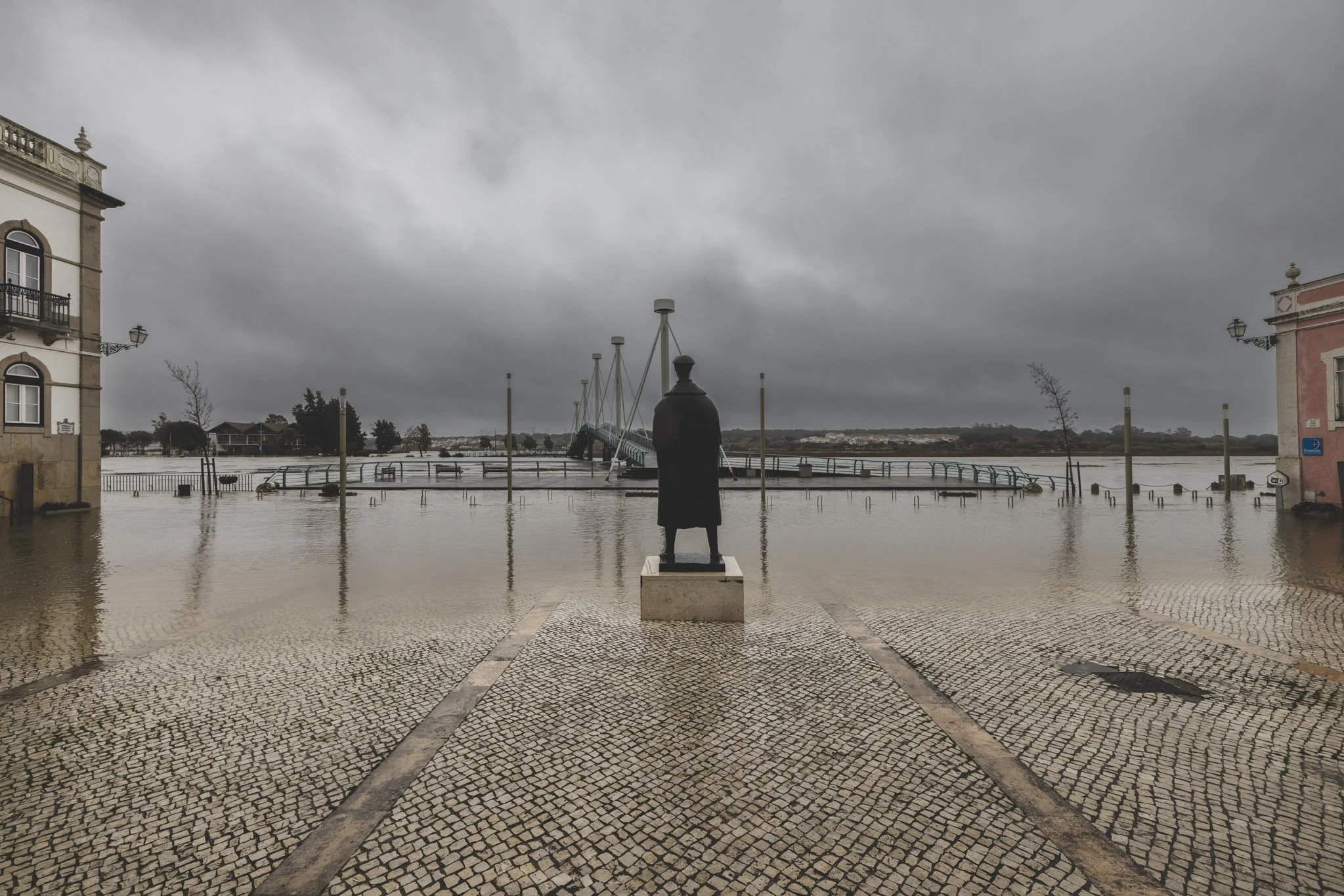
I framed the photo — and right as I did, kids ran past me shouting: “Grab that foosball table!”
I looked toward the river and, right there, floating downriver, was an upside-down foosball table. More debris followed behind it. Strange things. Things that shouldn’t be in the river like that.
And that’s when the thought landed properly: this time it wasn’t just a bit of flooding. This was turning into something bigger.
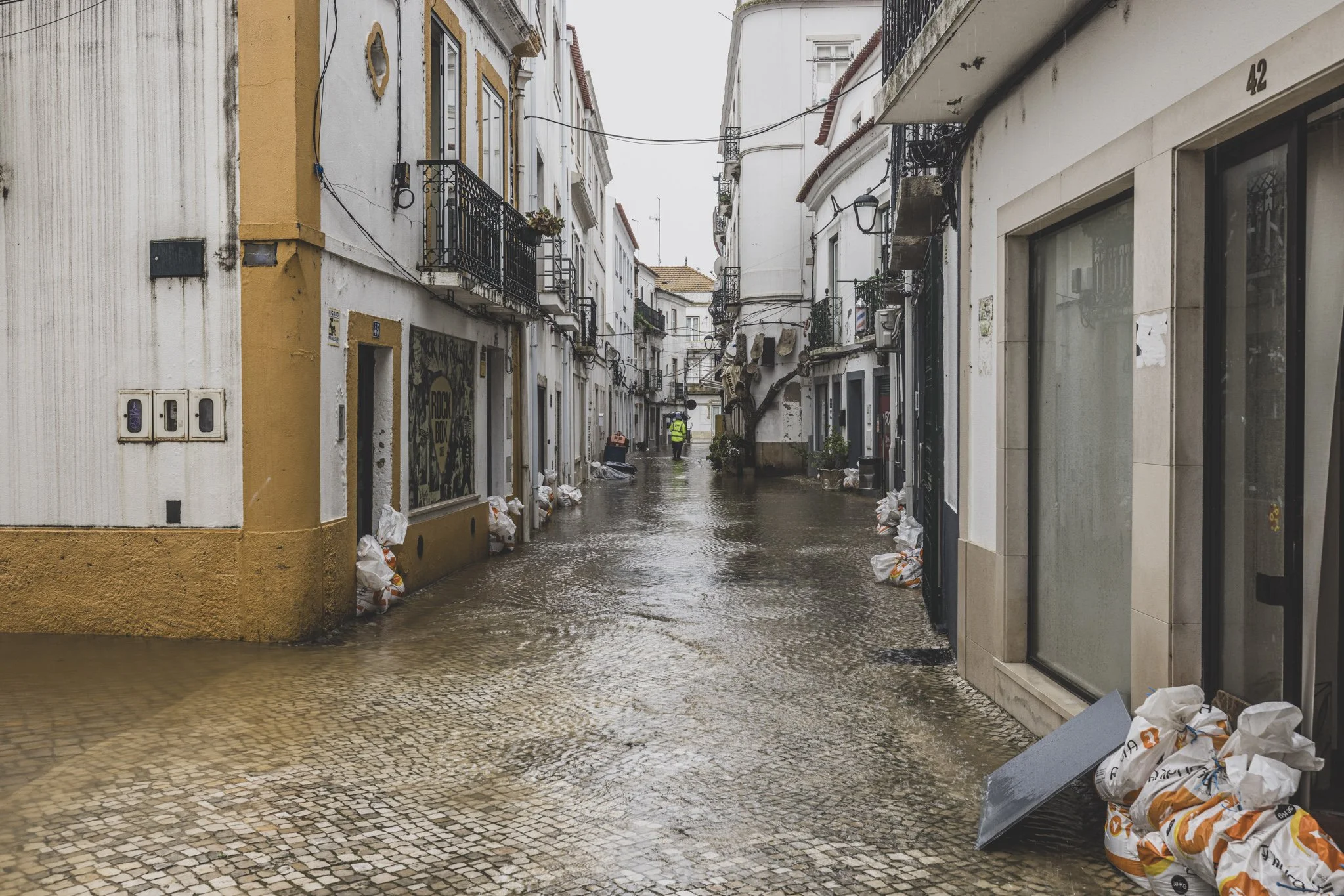
By the time I reached the back street behind my building, the water was already there. People who lived in those houses were running back and forth trying to save what they could.
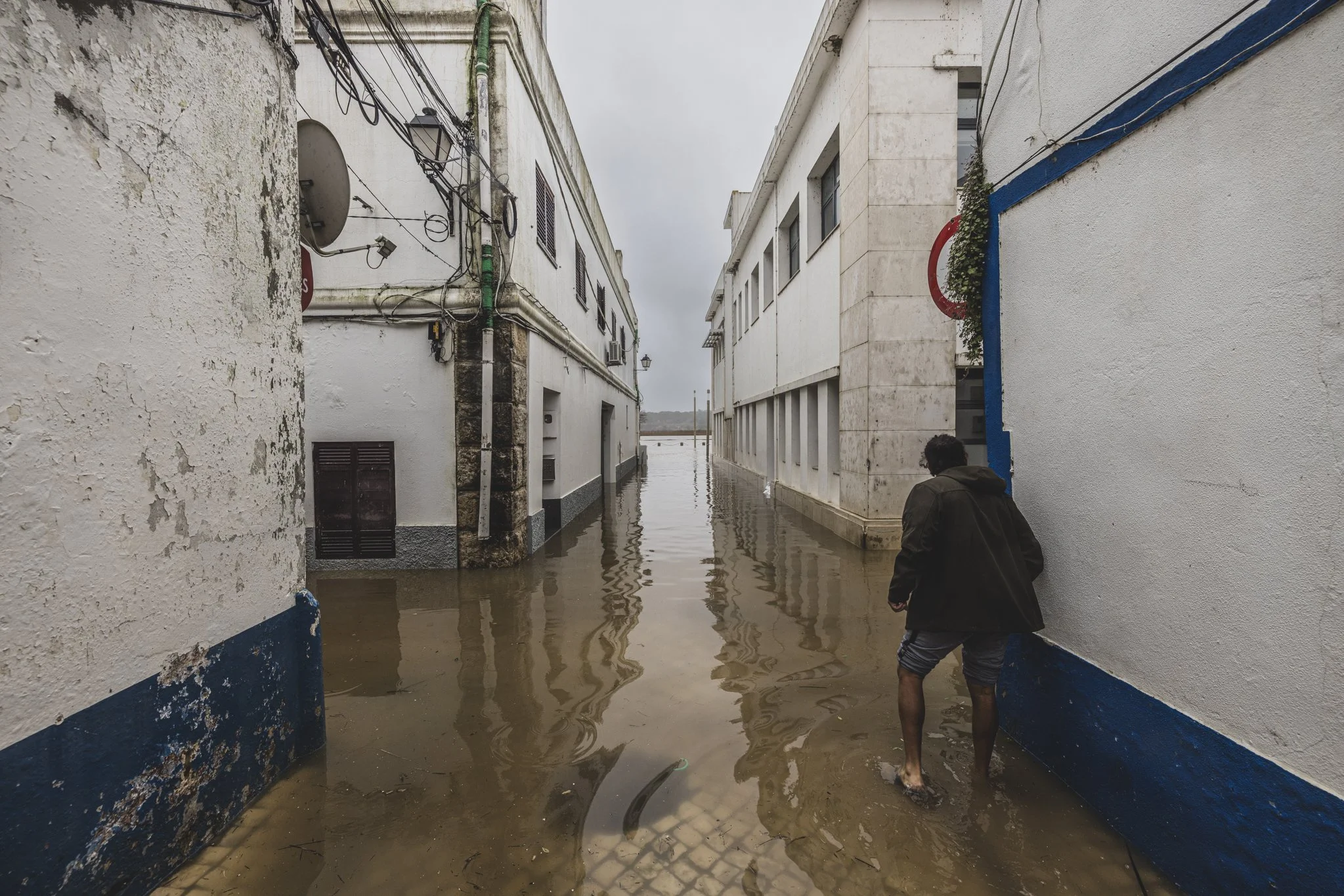
My next-door neighbour called me and confirmed what I already suspected: the water had entered the building. No one had been there to reinforce the door with paper bags and towels. The water got in. From his description, I was almost certain the ground-floor apartments were underwater.
He started talking about evacuation, worried the water might reach his apartment. I still didn’t believe it would reach the first floor — the water should recede before that — but it was clear it would cause serious damage to the ground-floor homes.
And that’s where the story catches up with the beginning.
—
So, boys… There I was again. In the car. Bare feet under the vents. Wet boots are drying off on the passenger-side floor. Waiting for the water to drop, the way it did earlier that morning — hoping it would give me one small window to get inside and grab what mattered.
After about an hour, Tio Bernardo called. He asked where I was and how things were on my side. He told me he was headed into town to meet Tio João at Social.
I explained my situation, what had happened, and told him the water should be receding by now — that I was going to try to reach the building again and then meet them at Social.
I hung up, slipped my feet back into still-damp but warm socks, pulled my boots on, and walked back in the direction of the building.
As I got closer, people were even more frantic — moving faster, carrying things, running back and forth.
I reached the back street, confident in my mission.
And I stopped immediately.
I just stood there looking down the street in amazement. Not only had the water not gone down, but it was higher than before.
And more worrying than that: it was still rising.
I stayed there for a moment, letting that reality sink in. Then I turned away and started walking toward Social, because my personal mission wasn’t happening. Not that night.